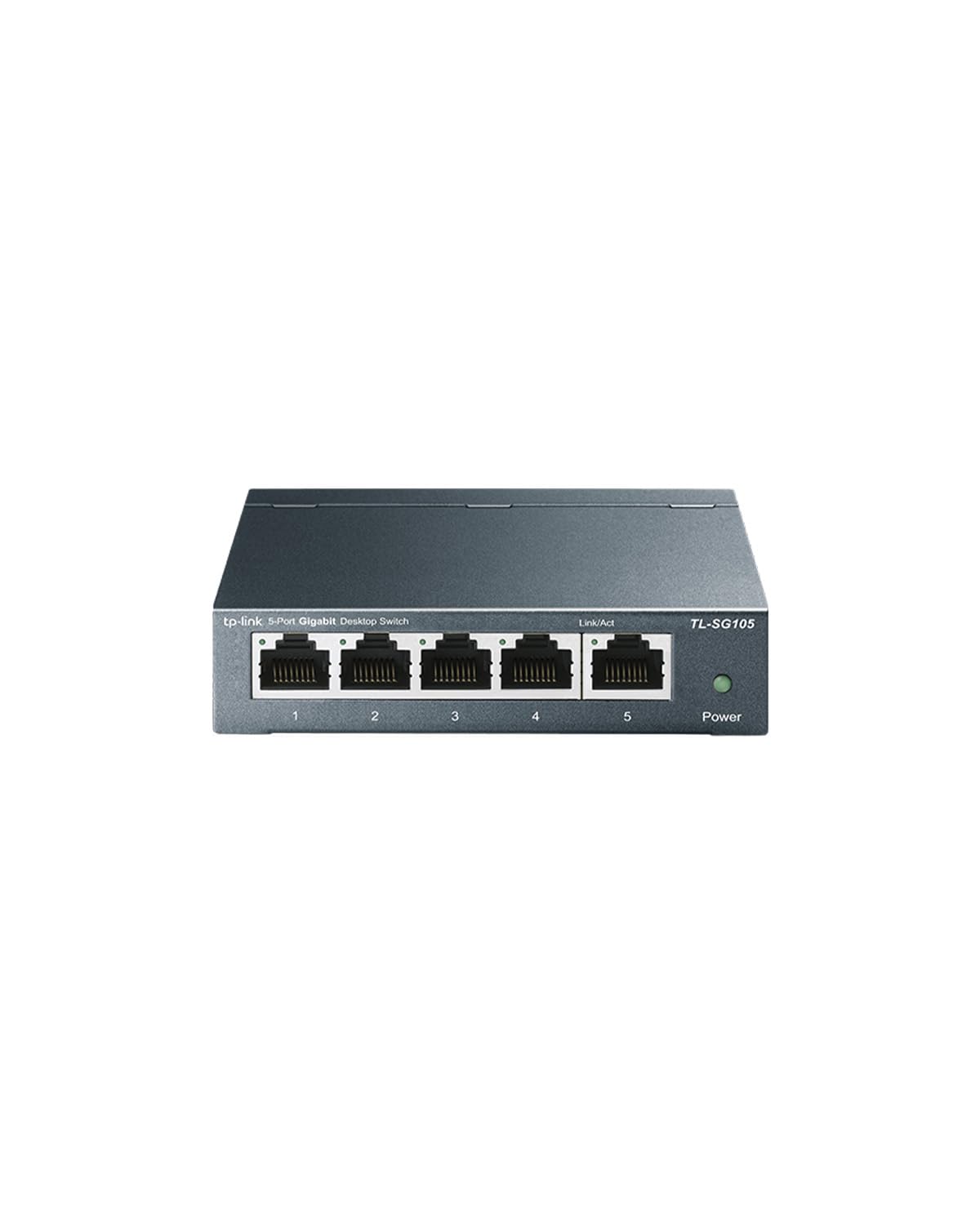
The TP-Link TL-SG105 is a compact five-port switch for adding wired connections where a router or existing network has too few ports.
This tp link tl sg105 switch review focuses on its Gigabit connectivity, simple setup, and practical limits for home and small-office use.
TP-Link TL-SG105 Review Summary
The quick verdict
130,000+ ratings
Read Amazon ReviewsTP-Link TL-SG105
A straightforward way to add wired Gigabit connections to a home office or small network, with fanless operation and basic traffic-prioritization features.
- Five RJ45 Ethernet ports supporting 10/100/1000 Mbps, auto-negotiation, and Auto MDI/MDIX.
- Plug-and-play operation for basic network expansion, with no software installation or configuration required.
- Port-based 802.1p/DSCP QoS and IGMP Snooping for traffic prioritization and multicast handling.
- IEEE 802.3X flow control for data transfer management.

Pros
- Five Gigabit ports provide a simple way to connect several wired devices.
- Automatic negotiation and plug-and-play setup reduce routine installation steps.
Consider before buying
- Five ports can fill quickly, especially when one connection links the switch to the router or upstream network.
- The switch does not provide PoE, so devices that need Ethernet-based power require another power source or suitable equipment.
Read the full review summary
The TL-SG105 gives you five 10/100/1000 Mbps Ethernet ports in a small metal enclosure.
Auto-negotiation and Auto MDI/MDIX are designed to make ordinary Ethernet connections straightforward, while plug-and-play setup avoids the need to install software or configure the switch for basic use.
It also includes port-based 802.1p/DSCP QoS and IGMP Snooping, which provide ways to prioritize certain traffic and manage multicast traffic.
Those features add flexibility, but this remains an unmanaged switch: choose it for a simple wired expansion point, not for a setup that needs detailed network controls. It has no PoE, so connected devices need their own power.
The buying factors
TP-Link TL-SG105 Scorecard
Editorial scores reflect listed features and buyer fit; they are not laboratory measurements or customer ratings.
Gigabit connectivity
All five Ethernet ports support 10/100/1000 Mbps connections, making it suitable for adding wired Gigabit links.
Basic setup
Plug-and-play operation and automatic port negotiation keep routine installation simple.
Port capacity
Five ports can serve a small group of wired devices, though the uplink connection uses one of them.
Traffic handling features
Port-based QoS and IGMP Snooping offer useful traffic options without turning it into a configurable managed switch.
Quiet placement
The fanless design is well suited to desks and other quiet indoor work areas.
Mounting flexibility
The metal case is designed for desktop or wall mounting, giving buyers more placement choices.
Key Features and Specifications of TP-Link TL-SG105
- Five RJ45 Ethernet ports supporting 10/100/1000 Mbps, auto-negotiation, and Auto MDI/MDIX.
- Plug-and-play operation for basic network expansion, with no software installation or configuration required.
- Port-based 802.1p/DSCP QoS and IGMP Snooping for traffic prioritization and multicast handling.
- IEEE 802.3X flow control for data transfer management.
- Fanless metal case designed for desktop or wall mounting.
- Compact stated dimensions of 3.94 × 3.85 × 0.98 inches.
Pros and Cons of TP-Link TL-SG105
Pros
- Five Gigabit ports provide a simple way to connect several wired devices.
- Automatic negotiation and plug-and-play setup reduce routine installation steps.
- Fanless operation suits spaces where fan noise would be distracting.
- QoS and IGMP Snooping add traffic-handling options for compatible network needs.
- Metal enclosure supports desktop or wall placement.
Consider before buying
- Five ports can fill quickly, especially when one connection links the switch to the router or upstream network.
- The switch does not provide PoE, so devices that need Ethernet-based power require another power source or suitable equipment.
- Its unmanaged design is not a fit for buyers who need detailed configuration or monitoring; check whether your network setup requires those controls.
Who Should Buy TP-Link TL-SG105?
Good fit
Consider the TL-SG105 if your router or current network point lacks enough Ethernet ports and you want to connect a small group of computers, televisions, consoles, printers, or other wired equipment.
Its five Gigabit ports and automatic negotiation make it a practical expansion point for ordinary home or small-office networks.
The fanless design and compact metal enclosure also make it suitable for a desk, shelf, or wall-mounted location.
Before buying, count the devices you need to connect, including the cable back to your router, and confirm the available placement and power arrangement work for your setup.
Who should skip it
Skip this model if your connected devices need PoE from the switch, or if you need detailed network configuration and monitoring.
Also look for a switch with more ports if five connections would leave no room for planned additions.
How the TP-Link TL-SG105 Fits a Small Wired Network
Five ports and the upstream link
The five-port count includes every Ethernet connection, including the one used to connect back to a router or another upstream switch.
In a typical expansion setup, that leaves four ports for local devices, so count your intended connections before deciding whether this capacity is enough.
Gigabit links in everyday setups
Each port supports 10/100/1000 Mbps and negotiates its connection automatically.
This makes the switch suitable for mixed Ethernet devices, while the actual link between two devices still depends on the capabilities of the connected equipment and the rest of the network.
QoS and multicast handling
Port-based 802.1p/DSCP QoS provides traffic-prioritization support, and IGMP Snooping is included for multicast traffic management.
These can be relevant in networks carrying voice, video, or multicast streams, but buyers should check that their wider network and devices use compatible traffic settings.
Placement, power, and control
The fanless metal housing supports quiet placement on a desktop or wall mounting.
The unit is not a PoE switch, so it does not replace separate power for connected equipment; its plug-and-play focus also means buyers needing configurable network policies should assess those requirements before choosing it.
Alternatives to TP-Link TL-SG105
No alternative model is recommended here. Compare the port count, power needs, and management features that matter to your network before choosing another option.
Is TP-Link TL-SG105 Worth It?
The TP-Link TL-SG105 is worth considering when you need a small, quiet, straightforward way to add wired Gigabit connections.
Five auto-negotiating ports, plug-and-play operation, and a metal fanless case make it a sensible fit for a modest home or office network.
Check the port count against your planned devices and remember that the switch does not supply PoE or provide detailed management controls. If those limits match your setup, it offers a focused solution for basic wired expansion.
Your review at a glance
130,000+ ratings
Read Amazon ReviewsTP-Link TL-SG105
A straightforward way to add wired Gigabit connections to a home office or small network, with fanless operation and basic traffic-prioritization features.
- Five RJ45 Ethernet ports supporting 10/100/1000 Mbps, auto-negotiation, and Auto MDI/MDIX.
- Plug-and-play operation for basic network expansion, with no software installation or configuration required.
- Port-based 802.1p/DSCP QoS and IGMP Snooping for traffic prioritization and multicast handling.
- IEEE 802.3X flow control for data transfer management.